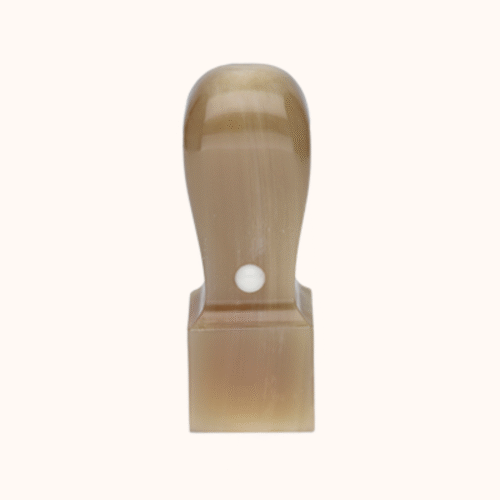


Japan has been reforming its relationship with paper for years. Ministers have made headlines, deadlines have been set, and the word “digitalization” has appeared in more government press releases than anyone could reasonably count. And yet, if you arrive in Japan today and start building a life here — opening a bank account, signing a lease, joining a company — you will almost certainly encounter a small cylindrical seal before the week is out.
The hanko vs signature Japan debate is not simply about tradition versus modernity. It is about a layered administrative culture that has changed meaningfully in some areas while barely shifting in others. Knowing which category your document falls into saves you from showing up unprepared, or worse, assuming the reform headlines mean the hanko is already gone.
This post maps where things actually stand in 2026: where stamps still dominate, where signatures have quietly taken over, and how to navigate the middle ground that most foreigners find themselves in. Whether you are starting a job, signing a lease, or just trying to understand why your ward office handed you a stamp pad, this is the breakdown you need.
Why hanko persists

To understand why Japan has not simply switched to signatures, it helps to understand what the hanko system was designed to do — and what it still does reasonably well.
A personal seal creates a consistent, verifiable mark. Unlike a signature, which varies slightly every time you write it, a stamp impression is uniform. In a bureaucratic culture that values consistency and traceability, that reliability has genuine value. The impression on a document can be compared against a registered seal certificate (inkan shomeisho) to confirm identity in a way that a handwritten signature cannot easily match without additional verification infrastructure.
There is also institutional inertia at play. Japan’s administrative and legal systems were built around the hanko. Changing them requires not just political will but practical rewiring: updating software, retraining staff, amending regulations at multiple levels of government, and convincing private institutions — banks, landlords, employers — to follow suit. Some have moved quickly. Many have not.
Cultural familiarity matters too. For Japanese nationals, acquiring and using a personal seal is simply part of becoming an adult. It is bought around the time of a first job or a first apartment. It sits in a drawer and comes out when something important needs to happen. Removing it entirely would feel, to many, like removing something that works.
For foreigners, the persistence of hanko culture can initially feel like bureaucratic friction. In practice, it is more predictable than it seems. Once you know the landscape, you know what to prepare.
Where signatures are common now
The past five years have produced real change in specific areas, largely driven by Japan’s push to digitize administrative processes following the Digital Agency’s establishment in 2021.
Signatures — including electronic signatures — are now commonly accepted in several contexts:
Online contracts and service agreements have broadly shifted away from physical stamps. If you sign up for a mobile phone plan, a streaming service, or many types of short-term housing contracts through digital platforms, a checkbox or electronic confirmation has replaced the stamp pad entirely in most cases.
Many private sector business-to-business contracts now accept electronic signatures through platforms like DocuSign or domestic equivalents. Large Japanese corporations, particularly those with significant international business, have moved relatively quickly here. Their foreign counterparts would find it unusual to be asked for a physical stamp on a vendor agreement.
Some government procedures have also shifted. The My Number Card system has enabled certain interactions with municipal offices to happen online, and a growing number of administrative submissions no longer require a physical hanko. That said, the pace varies considerably by municipality and by the specific procedure.
Foreign residents in Japan are also sometimes given more flexibility than their Japanese counterparts. Many institutions have adapted their processes to accommodate people who simply do not have a registered seal, accepting a signature or passport-based verification instead. This is inconsistent — it depends heavily on the specific branch, agent, or staff member — but it is more common than it was five years ago.
What has not changed: the assumption, in most traditional or formal contexts, that a physical hanko is the default. Signatures may be accepted. They are rarely the expected option.
Workplace and HR documents
This is the area where many foreigners first encounter the hanko question in a practical, immediate way. You have accepted a job offer, your contract arrives, and there is a stamp field next to your name.
For most employment contracts, a mitomein — an informal, non-registered personal seal — is what companies expect from individual employees. You are not typically required to provide a jitsuin (registered seal) unless you are signing something with significant legal or financial implications, such as a director agreement or a personal guarantee.
HR paperwork beyond the initial contract also tends to involve stamps. Expense reimbursement forms at many companies still use a stamped approval chain. Internal transfer requests, benefit enrollment forms, and commuting allowance applications may all have stamp fields. Whether these are enforced strictly or treated as optional depends on the company — larger international firms often waive them for foreign employees — but in traditional Japanese companies, the expectation is genuine.
If you are preparing to work in Japan, ComfysCareer helps with job placement — this article helps you prepare for the document culture you will encounter once you have the offer.
The reform story in workplaces is real but uneven. Japan’s government encouraged companies to eliminate internal hanko requirements for routine approvals during and after the pandemic period, and many did. Internal meeting sign-offs, daily attendance records, and routine internal memos have largely moved away from physical stamps at progressive companies. External documents — contracts with clients, agreements with landlords for company housing, official submissions to government bodies — have moved more slowly.
Common mistakes in workplace hanko situations:
- Assuming your foreign name cannot be put on a hanko. It can, rendered in katakana, hiragana, or Roman letters — and your employer will likely prefer you have one rather than leaving stamp fields blank.
- Using a convenience store stamp with generic characters. If the name on the stamp does not correspond to your registered name, it creates inconsistency across your documents.
- Forgetting your hanko on the specific day it is needed. Unlike a signature you can produce anywhere, a physical seal has to be physically present.
Banks, rentals, and government
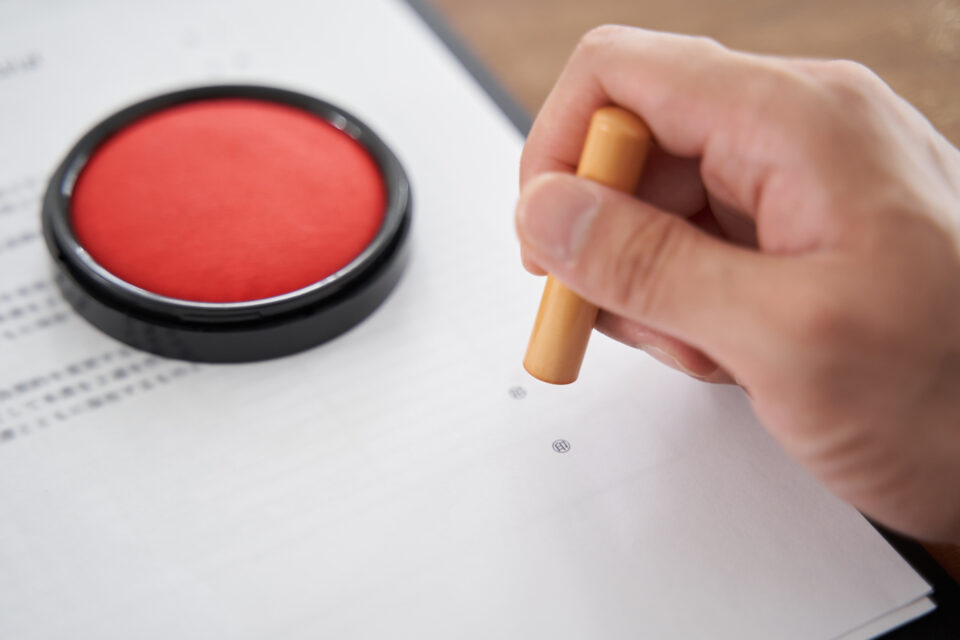
These three categories are where the hanko remains most consistently expected in 2026, and where foreigners are most likely to be caught off-guard.
Banking has seen some movement. Several major banks, including some of Japan’s largest retail banks, now allow account opening without a hanko, accepting a signature instead. Japan Post Bank made headlines with its hanko-free option. However, this varies by bank and by branch, and certain transactions — adding a beneficiary, changing account details, or handling inheritance-related banking — may still require a seal at many institutions. If you are opening an account, ask in advance whether a hanko is required. If it is, having one ready avoids a return visit.
Rentals remain one of the most consistently hanko-dependent contexts. Lease agreements, key receipt forms, and management company paperwork commonly expect a personal seal. As covered separately in detail, a mitomein is usually sufficient for tenants. The landlord-side paperwork and guarantor documentation may involve more formal requirements. Even agencies that have modernized their application process often revert to expecting a physical seal on the actual contract documents.
Government procedures present the most varied picture. At the national level, many tax filings, My Number-related processes, and social insurance submissions have been updated to accept digital signatures or online submissions. At the local level — ward offices, city halls, local pension offices — the experience is inconsistent. Some procedures still explicitly require a registered hanko. Others accept a signature or have quietly stopped requiring any seal at all. The safest approach when dealing with any government office is to ask before you go, confirm what they specifically require, and bring your hanko as a backup regardless.
Future outlook
Japan’s trajectory is clearly toward reducing hanko dependency, but the timeline is slower than the reform announcements have sometimes suggested.
The Digital Agency has set targets for digitizing administrative procedures, and progress is measurable in certain areas. Electronic signatures have legal standing in Japan under the Electronic Signatures Act, and courts have recognized digitally signed contracts in disputes. The legal infrastructure for a hanko-free future exists.
What lags is adoption at the institutional level. Banks update their policies branch by branch. Landlords are individual actors with individual preferences. Companies reform their internal processes on their own timelines. Government offices interpret national directives through local administrative culture.
For foreigners living in Japan now or arriving in the next few years, the practical picture is this: the hanko is not going away entirely in the near term, but the number of situations where it is strictly required continues to narrow. The areas most likely to remain stamp-dependent through the late 2020s are formal legal documents, traditional landlord-managed rentals, older financial institutions, and local government procedures in smaller municipalities.
The areas most likely to become fully signature or digital-signature compatible are large corporate employment contracts, online consumer services, many national government submissions, and transactions with internationally oriented businesses.
A personal hanko remains a practical investment for anyone building a life in Japan. The cost is low, the convenience is real, and having one means you are never the person holding up a lease signing because the stamp field is empty.
FAQ
Is a signature legally valid in Japan? Yes, in most contexts. Japanese law does not require a hanko for a contract to be valid. However, many institutions have their own internal requirements that go beyond legal minimum, and they may refuse to process documents that do not include a seal even if the contract itself would hold up legally.
Has Japan really eliminated the hanko requirement? Partially. The government has eliminated hanko requirements for many national administrative procedures, and large companies have dropped internal stamp approvals in many cases. For banking, rentals, and local government, the picture is more mixed and many requirements remain.
What type of hanko do most foreigners need? For daily life — workplace documents, bank accounts, rental contracts — a mitomein (informal, non-registered personal seal) covers the vast majority of situations. A jitsuin (registered seal) is typically only needed for property purchases, vehicle registration, or acting as a guarantor on someone else’s contract.
Can my hanko be in English or Roman letters? Yes. Many hanko services produce seals in Roman letters, katakana, or hiragana. For foreign residents, katakana is the most conventional choice, but Roman letter seals are accepted in most practical contexts.
Do digital hanko work in Japan? For online and electronic document workflows, yes. Several platforms support digital hanko images that can be applied to PDFs and digital forms. They are not a substitute for a physical seal in contexts that require one — a landlord asking you to stamp a lease document still means physical ink on paper — but they are increasingly useful for business and professional documents.
Will the hanko be gone in ten years? Probably not entirely. The more likely outcome is continued bifurcation: digital and large-corporate contexts become fully stamp-free, while traditional institutions, private landlords, and local government retain hanko expectations for the foreseeable future. Japan rarely eliminates old systems entirely — it tends to run them in parallel with new ones until the old one fades naturally.
Next steps
Understanding the hanko landscape is the first step. Having a seal ready before you need one is the second. Whether you are arriving for work, signing your first lease, or navigating a bank account opening, a quality personal hanko removes a variable from an already unfamiliar process. HankoHub offers both physical hanko and digital hanko options for foreigners in Japan, with custom name rendering in katakana, hiragana, and Roman letters. Order before the paperwork arrives, not during it.